In cosmetic dermatology and advanced skincare formulation, the eradication of fine lines and deep structural wrinkles has moved past single-ingredient approaches. While standard retinoids and Vitamin C remain staple compounds, multi-peptide protocols (or stacks) have established themselves as the cutting-edge standard for non-invasive skin rejuvenation.
Rather than relying on one isolated molecule, advanced protocols combine separate classes of amino acid chains to target multiple layers of the extracellular matrix (ECM) simultaneously. These protocols use signal, neurotransmitter-inhibiting, and carrier peptides together to replicate the biological effects of invasive cosmetic procedures without the associated downtime.
This review examines the mechanics of targeted peptide protocols, explains how these compounds interact synergistically, and evaluates user feedback regarding their long-term efficacy against wrinkles.
1. The Science of the Protocol: Synergy Over Single Actives
The key to an effective peptide protocol for wrinkles lies in its mechanism of action synergy. Human skin wrinkles form through two distinct pathways: structural degradation (loss of collagen and elastin) and repetitive mechanical expression (muscle contractions). A professional-grade protocol addresses both simultaneously by combining three primary peptide categories:
1. Neurotransmitter Inhibiting Peptides (The "Topical Botox" Effect)
Primary Examples: Acetyl Hexapeptide-8 (Argireline®, including the 50x more potent Argireline® Amplified), Pentapeptide-18.
Mechanism: These molecules destabilize the SNARE complex, slightly weakening the neurotransmitter signals that command facial muscles to contract. By reducing dynamic facial expressions, they smooth out persistent dynamic wrinkles like crow's feet and forehead expression lines.
2. Signal Peptides (The Collagen Architects)
Primary Examples: Palmitoyl Tripeptide-1, Palmitoyl Tetrapeptide-7 (Matrixyl 3000+), Palmitoyl Pentapeptide-4.
Mechanism: These sequences mimic the natural fragments of broken-down collagen within the dermal matrix. When absorbed, they trick the skin cells into initiating a self-repair cascade, rapidly triggering the neosynthesis of Collagen Type I, Collagen Type IV, and elastin structural support fibers.
3. Carrier Peptides (The Cellular Technicians)
Primary Example: GHK-Cu (Copper Tripeptide-1).
Mechanism: Copper is an essential cofactor for lysyl oxidase, an enzyme critical for cross-linking collagen and elastin fibers. Carrier peptides deliver trace copper minerals straight into the fibroblasts, boosting overall skin density, enhancing healing, and improving tissue bounce.
2. Advanced Multi-Peptide Protocol Configurations
When evaluating user reviews and clinical data, the highest success rates occur when these specific peptide groups are organized into structured, step-by-step applications. Below is an overview of a scientifically validated anti-wrinkle protocol matrix:
Phase / Step | Core Peptide Active Blend | Targeted Wrinkle Typology | Physiological Objective |
Step 1: Focus (Serum) | Argireline® Amplified + Pentapeptide-18 | Dynamic lines, forehead creases, crow's feet | Destabilizes SNARE complex to relax micro-muscles. |
Step 2: Rebuild (Serum/Gel) | GHK-Cu + Matrixyl 3000+ | Static wrinkles, nasolabial folds, micro-texture | Elevates structural collagen cross-linking and elastin synthesis. |
Step 3: Seal (Cream) | Palmitoyl Pentapeptide-4 + Niacinamide | Superficial fine lines, crepey skin texture | Restores lipid barrier, optimizes skin cell ATP levels. |
3. Review Analysis: What the Clinical Data and Users Say
Analyzing user feedback from clinical trials and long-term user reports reveals clear trends regarding what multi-peptide protocols can—and cannot—achieve.
Short-Term Efficacy (Days 1–28)
User Feedback: Reviews frequently report an immediate improvement in skin hydration and surface smoothness within the first two weeks. For protocols utilizing high-potency neurotransmitter-inhibiting blends, users observe a noticeable "firming" or "softening" of dynamic lines around the eyes and forehead.
Clinical Backing: Independent in vivo studies confirm that a standardized 10% Argireline protocol achieves up to a 20% to 30% reduction in wrinkle depth after 28 days of consistent, twice-daily application.
Long-Term Remodeling (Months 2–6)
User Feedback: The true "before and after" structural transformation becomes apparent around the 60 to 90-day mark. Users note that deeper static wrinkles, such as stubborn laugh lines or neck bands, appear less pronounced, and the skin displays a thicker, more resilient texture.
Clinical Backing: Long-term cellular turnover relies on the signal peptides. Over months, the continuous upregulation of collagen and fibrillin proteins helps reconstruct the underlying matrix, effectively filling out surface indentation from within.
4. Maximizing Efficacy: Delivery Systems and Pitfalls
Even the best peptide protocol can fail if the formulation lacks the chemical infrastructure required to cross the stratum corneum (the skin's outermost protective layer).
The Importance of Liposomal and Fatty Acid Vehicles
Pure peptides are hydrophilic (water-loving) and relatively large, making it difficult for them to pass through the lipid-rich barrier of the skin naturally. Elite protocols resolve this by utilizing Palmitoyl attachments (attaching a fatty acid chain to the peptide) or encapsulating the actives inside microscopic liposomes. This adjustment increases penetration efficiency by up to 50% compared to un-modified aqueous solutions.
Formulation Warning: Copper peptides (GHK-Cu) and direct Vitamin C (L-Ascorbic Acid) should not be mixed at the exact same step in your routine. The pure acid can chelate the copper ion, breaking down the peptide structure and rendering both actives completely ineffective. Space them out between your morning and evening applications.
5. Summary Blueprint for Implementing a Peptide Protocol
If you are structuring an advanced anti-wrinkle protocol, ensure your routine meets these core criteria:
[ ] Comprehensive Stacking: Ensure the protocol features at least one neurotransmitter inhibitor (e.g., Argireline) and one signal peptide blend (e.g., Matrixyl).
[ ] Lipophilic Enhancement: Opt for formulas listing palmitoyl-grafted peptides to ensure deep skin penetration.
[ ] Stability Check: Prioritize airless pump packaging to prevent the oxidation of fragile peptide chains and auxiliary ingredients.
[ ] pH Compatibility: Keep highly acidic treatments (like low-pH glycolic peels) separate from your peptide serums to prevent peptide denaturation.
Visualizing Peptide Synthesis and Structural Analysis
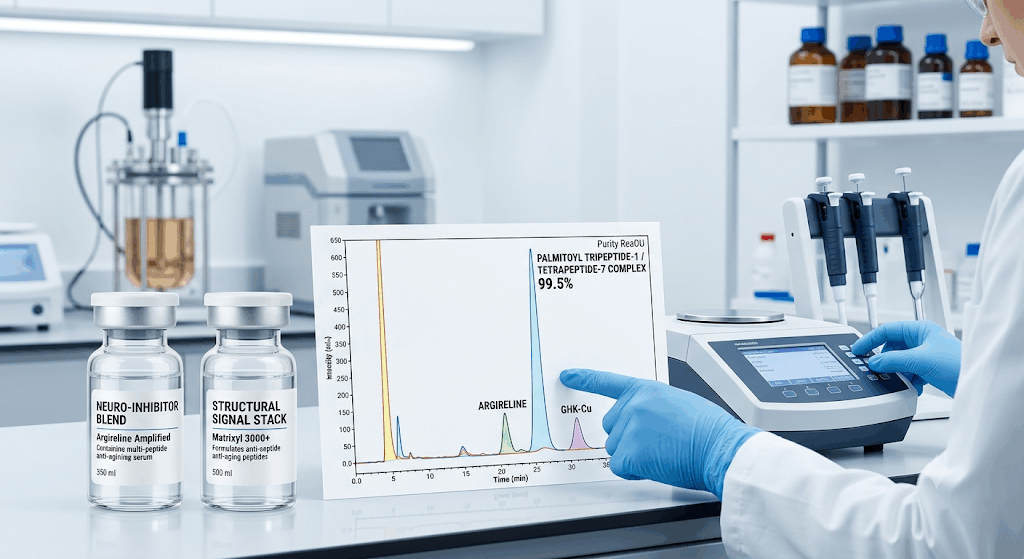
To ensure maximum bio-availability and wrinkle-reduction performance, advanced topical peptide protocols rely on precise molecular engineering. The analytical image below displays a state-of-the-art cosmetic laboratory setting where multi-peptide complexes undergo High-Performance Liquid Chromatography (HPLC) verification to guarantee raw purity and structural chain correctness before being finalized into premium delivery vehicles.
For a broader overview of how modern skincare research discovers these anti-aging sequences, you can view this analysis on The Discovery of the Age Reversing Peptide. This discussion explains how modern stem cell and tissue engineering labs screen for unique peptide sequences to target cellular longevity and improve skin architecture.