
The 2026 obesity management landscape is defined by a massive economic divergence. On one side sits the heavily regulated, commercially perfected pharmaceutical ecosystem led by Novo Nordisk (Ozempic/Wegovy) and Eli Lilly (Zepbound/Mounjaro). On the other is a booming, legally ambiguous "gray market" of compounding pharmacies and direct-to-consumer research peptides.
For patients and investors alike, the core question is no longer just whether these drugs work—it is how to optimize the return on investment (ROI) for weight loss. Does the massive price discount of raw, research-grade peptides justify the absence of regulatory guardrails? And commercially, how do these raw materials compare to the efficacy of finished, branded auto-injector pens?
To answer this, we have to look past the brand names and evaluate the supply chain, the molecular evolution, and the clinical data driving this multi-billion-dollar shadow economy.
Before we break down the molecular data and supply chain mechanics, use this interactive tool to visualize the sheer financial scale of this market divergence over time.
The Commercial Reality: The Pen vs. The Powder
The cost disparity between commercial drugs like Ozempic and raw peptides is staggering, but it is entirely predictable when you look at how pharmaceuticals are priced and distributed.
A monthly supply of branded Wegovy (the weight-loss specific dosage of Semaglutide) or Zepbound costs between $1,000 and $1,350 out-of-pocket in the United States. This price tag does not merely cover the raw Active Pharmaceutical Ingredient (API). When you buy Ozempic, you are paying for:
Decades of R&D: Recouping the billions spent on Phase 1-3 clinical trials.
The Delivery Mechanism: The proprietary, single-use, pre-filled auto-injector pens, which are notoriously complex and expensive to manufacture at a global scale.
Regulatory Assurance: The FDA-mandated quality control, sterility testing, and cold-chain logistics guarantees.
Corporate Margins: Marketing budgets and the profit margins required to satisfy shareholders.
Conversely, the research peptide market strips away all of these layers. Direct-to-consumer peptide vendors sell vials of lyophilized (freeze-dried) powder—often labeled strictly "For Research Purposes Only" and "Not for Human Consumption." A month's supply of raw Semaglutide peptide might cost as little as $50 to $100.
In this gray market, the buyer acts as the final manufacturer. You are purchasing the raw chemical code, accepting zero regulatory protection, and taking on the labor of reconstitution and dosing to save up to 90% of the cost.
The Efficacy Race: Why Buyers Are Leaving Semaglutide Behind
It is a common misconception that the peptide market exists solely as a cheaper alternative to Ozempic. In 2026, the real driver of the research peptide market is early access to next-generation molecules.
Ozempic is based on Semaglutide, a first-generation GLP-1 (glucagon-like peptide-1) mono-agonist. While revolutionary upon release, it is no longer the pinnacle of obesity science. Buyers navigating the peptide market are largely bypassing Semaglutide entirely to purchase newer, highly potent multi-receptor agonists that are either facing commercial shortages or are not yet FDA-approved.
Tier 1: Semaglutide (The GLP-1 Baseline)
Commercial Names: Ozempic, Wegovy, Rybelsus.
Mechanism: Mimics the GLP-1 hormone to slow gastric emptying and signal fullness to the brain.
Efficacy: Averages 15% total body weight loss over 68 weeks.
Tier 2: Tirzepatide (The Dual Agonist)
Commercial Names: Mounjaro, Zepbound.
Mechanism: Combines GLP-1 with GIP (glucose-dependent insulinotropic polypeptide). GIP further improves insulin sensitivity and alters how the body stores fat.
Efficacy: Averages 20% to 22.5% total body weight loss over 72 weeks. In the gray market, Tirzepatide peptides command a premium over Semaglutide due to this superior efficacy and improved side-effect profile.
Tier 3: Retatrutide (The Triple Agonist)
Commercial Names: Currently investigational (Phase 3 trials concluding in 2026).
Mechanism: The "Triple G"—combining GLP-1, GIP, and Glucagon receptor agonism. While GLP-1 and GIP reduce appetite and regulate insulin, the addition of Glucagon directly increases basal energy expenditure. You eat less, and your body actively burns more calories at rest.
Efficacy: In May 2026, Eli Lilly released the TRIUMPH-1 Phase 3 data for Retatrutide, shattering previous benchmarks. Participants on the 12 mg dose achieved a staggering 28.3% weight loss at 80 weeks. In the study extension out to 104 weeks, participants averaged 30.3% weight loss—a level previously only achievable through bariatric surgery.
This is where the commercial peptide market flexes its primary advantage. Because Retatrutide is still pending NDA filing and FDA approval for the broader consumer market, the only way individuals are currently accessing this highly potent molecule is by purchasing it as an unregulated research peptide. For biohackers and individuals with severe obesity, the ROI of accessing a drug that delivers 30% weight loss years ahead of the commercial timeline is viewed as worth the risk.
The Compounding Middle Ground
Between the $1,000 branded pen and the $50 raw peptide sits the compounding pharmacy—currently a massive commercial battleground.
Under FDA regulations (Sections 503A and 503B of the FD&C Act), when a drug like Wegovy or Zepbound goes onto the official FDA drug shortage list, specialized compounding pharmacies are legally permitted to create "essentially a copy" of the drug to meet patient demand. They source the raw API from manufacturers, mix it with carrier solutions (like Vitamin B12), and sell it in sterile vials directly to patients, usually via telehealth platforms.
Compounded medications typically cost between $250 and $400 per month. They offer a strong middle-ground ROI: significantly cheaper than branded pens, but mixed in a sterile, state-licensed facility, removing the dangerous DIY aspect of raw peptides. However, as pharmaceutical giants scale their manufacturing capacity in 2026 to resolve these shortages, this legal loophole is actively closing, forcing compounding pharmacies to navigate increasingly aggressive patent litigation.
The Risk-Adjusted ROI: Reconstitution and Reality
If you bypass both the commercial pen and the compounding pharmacy, you land in the direct-to-consumer peptide market. This is where the financial ROI is highest, but the medical and operational ROI is deeply compromised.
A commercial Ozempic pen is "dial-and-dose." The user turns a knob to the exact milligram, presses it against their skin, and an auto-retracting needle delivers a sterile, perfectly pH-balanced liquid.
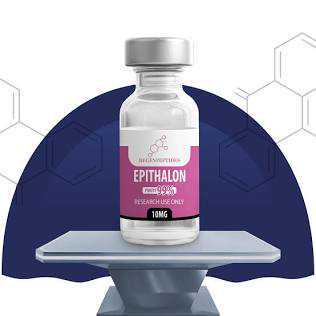
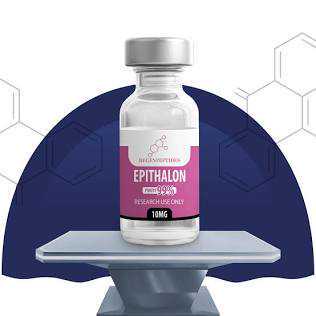
A research peptide arrives as a vial of solid, white, freeze-dried powder (pictured above). To use it, a patient must perform their own pharmacological reconstitution. They must purchase bacteriostatic water and insulin syringes, carefully inject the water into the vial without damaging the fragile peptide chains, calculate the exact milligram-to-milliliter dilution ratio themselves, and manually draw up the correct dose.
This introduces severe vectors for failure:
Purity and Synthesis Residue: Synthesizing peptides requires harsh chemicals, most notably Trifluoroacetic Acid (TFA). Commercial pharmaceutical manufacturing removes this through expensive purification steps. Cheap, overseas peptide labs often skip this, leaving toxic TFA salts in the powder, which can cause severe injection site reactions or tissue damage.
Degradation: Peptides are fragile. Once reconstituted, they must be kept strictly refrigerated. Even in powder form, excessive heat during international shipping can degrade the molecule, rendering it useless. You may pay $50 for a vial, but if the product is dead on arrival, your ROI is zero.
Under-Dosing: Independent lab testing of gray-market peptides routinely finds vials containing only 50% to 70% of the advertised milligram count. A "10mg" vial of Tirzepatide might only contain 6mg, skewing the math on how much money the buyer is actually saving.
Sterility: A kitchen counter is not a cleanroom. Repeatedly puncturing a vial with a syringe introduces the risk of bacterial contamination, which can lead to life-threatening sepsis.
The Final Verdict: Comparing the Tiers
When analyzing the market in 2026, there is no single "better" option—it depends entirely on what the user values: capital, safety, or access.
Feature | Branded (Ozempic/Zepbound) | Compounded (Telehealth) | Research Peptides |
Monthly Cost | $1,000 - $1,350 | $250 - $400 | $50 - $150 |
Delivery Method | Pre-filled auto-injector pen | Vial and insulin syringes | DIY reconstitution & syringes |
Quality Control | FDA approved, sterile, precise | State pharmacy board regulated | None (buyer assumes all risk) |
Molecule Access | Semaglutide, Tirzepatide | Semaglutide, Tirzepatide | Semaglutide, Tirzepatide, Retatrutide |
Best For... | Those with insurance coverage or risk aversion | Cash-buyers wanting safety at a discount | Biohackers seeking next-gen molecules |
For pure financial efficiency and immediate access to the 30% weight-loss ceiling of Retatrutide, the research peptide market undeniably wins on paper. However, from a risk-adjusted perspective, the commercial drugs—and to a lesser extent, regulated compounded formulations—offer something invaluable: certainty.
In a biological system as complex as human metabolism, precision, sterility, and exact dosing are not just luxury conveniences; they are medical necessities. Unless a user is prepared to act as an amateur pharmacist and accepts the risks of an unregulated supply chain, the commercial premium of Ozempic or Zepbound remains the most rational investment.