
The legality and safety of semaglutide injections are subjects of intense regulatory scrutiny due to the rise of unauthorized and potentially dangerous products in the market. Understanding the distinction between legitimate medical use, pharmacy compounding, and the illicit "research chemical" market is essential for patient safety.
The Legal Landscape of Semaglutide
Semaglutide is a potent GLP-1 receptor agonist approved by regulatory bodies like the FDA and MHRA for the management of type 2 diabetes and chronic weight management. Its legal status is strictly defined:
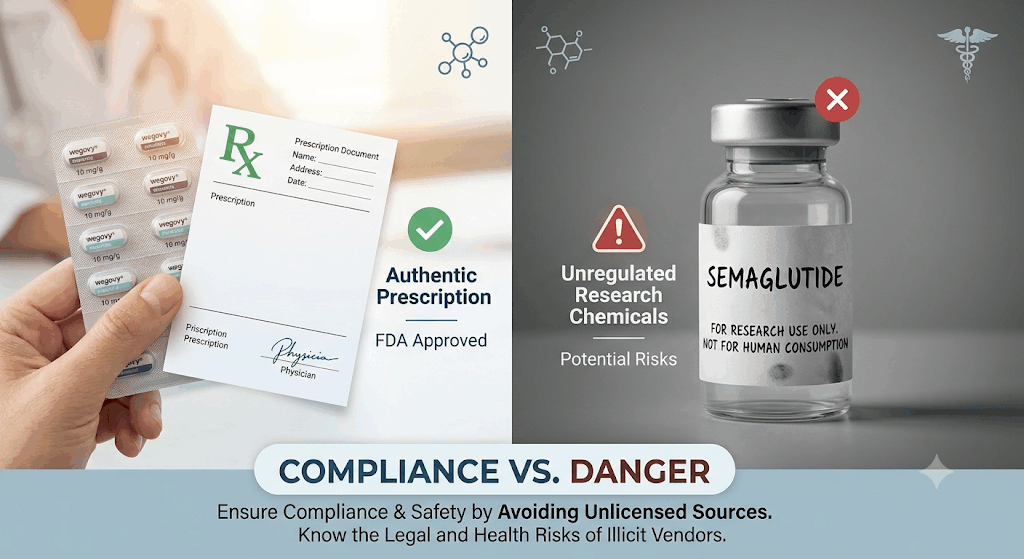
FDA-Approved Products: Authentic semaglutide medications (such as Wegovy® or Ozempic®) are legally manufactured, rigorously tested for safety and efficacy, and available only via a valid prescription from a licensed healthcare provider.
Compounded Drugs: Compounding is a practice where a licensed pharmacist creates a medication to meet the specific medical needs of an individual patient, such as an allergy to an ingredient in the commercial version. Compounded drugs are not FDA-approved, meaning the agency does not pre-review them for safety, quality, or efficacy.
The "Research Chemical" Myth: Many online vendors market semaglutide as a "research chemical" or "for laboratory use only" to bypass regulations. These products are not legal for human consumption. Purchasing these items for personal weight loss is illegal and poses severe health risks.
The Dangers of Unregulated "Research" Sources
The market for non-prescription semaglutide is rife with illicit activity. Studies have consistently found that products sold by unregulated online "research" vendors are often substandard or falsified.
Quality and Purity: Independent analysis of "research" semaglutide has revealed purity levels as low as 7–14%, compared to the 99% claimed by labels.
Dosing Inaccuracy: These products frequently contain substantially higher or lower amounts of the active ingredient than advertised, leading to a high risk of accidental overdose or ineffective treatment.
Contamination Risks: Because these products lack Good Manufacturing Practice (GMP) standards, they are prone to contamination with endotoxins or other hazardous impurities.
Scams: Many websites posing as "research chemical" suppliers are fraudulent, engaging in non-delivery scams or requesting additional payments to "clear customs".
Compliance and Safe Practices
To ensure your health and safety, adhere to the following regulatory and medical guidelines:
Always Use Prescriptions: Only obtain semaglutide through a licensed physician and fill your prescription at a state-licensed pharmacy.
Verify the Source: If you are using a compounded version, ensure the pharmacy is legitimate and operating under valid licensure. Avoid telehealth platforms that do not require a screening and prescription by a licensed doctor.
Avoid "Research" Labels: If a website sells "semaglutide for research purposes," do not purchase it for personal use. These products bypass the pharmaceutical supply chain and are inherently unsafe.
Monitor for Red Flags: Be wary of companies that claim their product is the same as an FDA-approved drug, offer "too good to be true" discounts, or do not require a medical consultation.
In summary, semaglutide is a powerful medical intervention that requires professional oversight. Any attempt to acquire or use it outside of the legitimate, prescription-based medical system is not only legally precarious but also places you at significant risk of using contaminated, misdosed, or fraudulent products.