
1. The Origin of the Hair Loss Rumor
In online fitness and research forums, anecdotes periodically emerge claiming that BPC-157 triggers hair shedding or hair loss. For researchers and sports science practitioners, it is essential to distinguish between causality and correlation in these reports.
Currently, there is zero clinical evidence in preclinical trials or peer-reviewed literature suggesting that BPC-157 acts as a DHT (dihydrotestosterone) derivative or interferes with the hair follicle growth cycle in a way that would promote androgenic alopecia.
2. Mechanistic Analysis: Angiogenesis and Hair Growth
To determine if BPC-157 could theoretically impact hair, we must look at its primary biological pathway: angiogenesis (the formation of new blood vessels).
The VEGF Pathway: BPC-157 promotes tissue repair primarily by upregulating Vascular Endothelial Growth Factor (VEGF).
The Connection: Interestingly, in dermatology, the upregulation of VEGF is frequently associated with improved blood flow to the hair follicle, which is a common therapeutic strategy for hair retention.
Logical Disconnect: If BPC-157 increases localized blood supply to tissue, the biological hypothesis would suggest that it might support, rather than inhibit, follicular health. There is no documented metabolic pathway where BPC-157 would accelerate follicle miniaturization or telogen effluvium.
3. Investigating Alternative Factors
If a researcher experiences hair shedding while undergoing a BPC-157 protocol, science suggests looking at external variables rather than the peptide itself:
Systemic Stress: Hair loss is often a "lagging indicator" of physiological stress. If the athlete is undergoing an intense training cycle, extreme calorie restriction, or recovering from a severe injury (the original reason for using BPC-157), the shedding may be a response to the physical trauma or nutritional deficiency, not the peptide.
Compounding Factors: Users often stack BPC-157 with other performance-enhancing compounds, some of which are known to influence hormonal pathways (such as exogenous testosterone or high-dose SARMs). These compounds are much more likely to be the source of hair thinning than a regenerative peptide.
Impurity Risks: Substandard, low-purity BPC-157 that contains bacterial endotoxins can cause systemic immune responses. Chronic inflammation is a known driver of hair thinning, suggesting that contamination in low-quality products—not the BPC-157 molecule itself—could trigger adverse reactions.
4. Addressing Other Notable Anecdotal Side Effects
While hair loss is scientifically unsupported, there are other side effects occasionally reported in the research community that warrant objective monitoring:
Anhedonia (Emotional Blunting): Some users report a sense of "emotional numbness" or reduced motivation. While not fully understood, this is hypothesized to be related to the peptide's interaction with the dopamine or serotonin systems in the brain. If this occurs, standard research protocol is to cease administration immediately.
Localized Reaction: Injection site irritation is the most common "side effect," usually resulting from poor sterile technique or a reaction to the benzyl alcohol in the bacteriostatic water.
5. Summary Checklist for Researchers
To maintain experimental safety and minimize potential side effects:
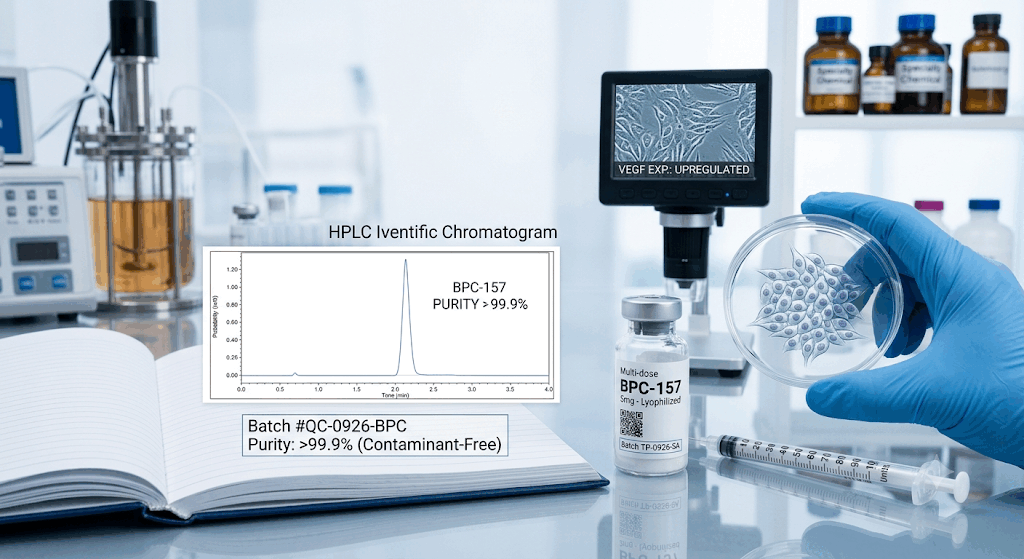
[ ] Verify Purity: Always source peptides with independent HPLC/LC-MS verification to ensure there are no contaminating compounds that could induce systemic inflammation.
[ ] Document Variables: Keep a comprehensive log of all other compounds, supplements, and training stressors present during your BPC-157 protocol to accurately identify the source of any changes.
[ ] Sterility Discipline: Use fresh, sterile bacteriostatic water and follow strict aseptic techniques to avoid endotoxin-induced inflammatory responses.
Visualizing Scientific Safety and Purity Standards
To avoid the adverse reactions associated with impurities, research must be conducted using verified, high-purity compounds. The image below displays the analytical verification process required to ensure that BPC-157 research is free from contaminants that could trigger unintended systemic effects.
Note: For further reading on the structural stability and safety protocols of regenerative peptides, you may consult Comprehensive Review of BPC-157 Preclinical Data.